Driving School Games Car Game
S R G Gaming L.L.CRole Playing
4.50.00 Reviews
- Version
- 7.9
- Installs
- 1.00M
- Age Rating
- Everyone
Screenshots
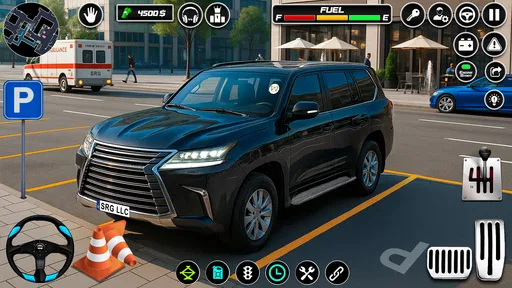
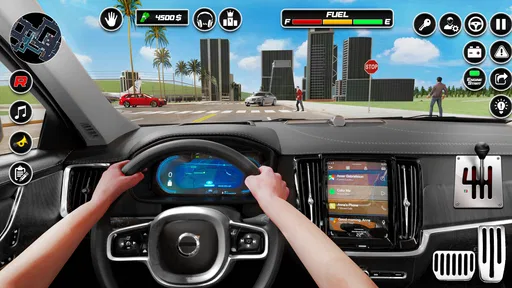
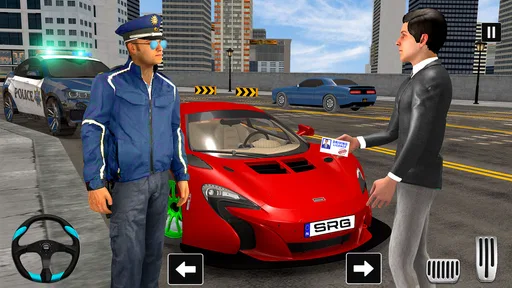
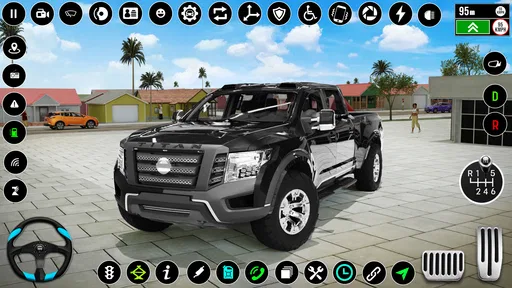
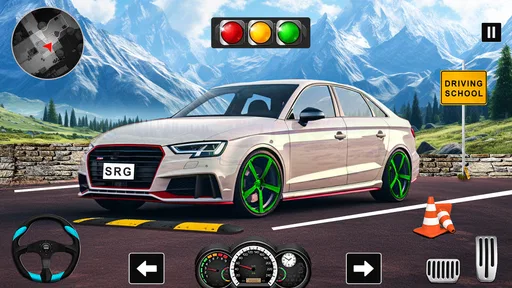
Our Review of Driving School Games Car Game
 Analysis by Appyee
I approached Driving School Games Car Game expecting a straightforward mobile driving exercise, and that is largely what it offers: a role-playing game built around the idea of learning to drive through virtual lessons. It is free to download, suitable for Everyone, and developed by S R G Gaming L.L.C. After spending time with it, I found the appeal is less about dramatic racing and more about the small decisions involved in controlling a car carefully.
That distinction matters. If you want fast races, elaborate tuning, or a competitive online scene, this is probably not the right destination. If you would rather practice road-oriented driving in short sessions and enjoy the feeling of completing structured tasks, the game has a more comfortable place in your library. Its average rating is 4.5 from around 1.5 thousand ratings, while its reach has passed one million installs, so there is clearly an audience for this lighter take on driving games.
What the current version feels like to play
The current version is 7.9, and the game presents itself as a driving-school experience rather than a conventional arcade racer. That gives each session a different rhythm. Instead of immediately chasing speed, I found myself paying attention to positioning, steering, stopping, and the general process of moving through a driving task without making careless mistakes.
The role-playing label may sound unusual for a driving title, but it makes sense when the experience is viewed as progression through lessons. You are not simply selecting a car and trying to finish ahead of opponents. The motivation comes from taking on a driving objective, learning how the controls respond, and trying again when an attempt does not go as planned.
For a phone game, that format works well in everyday situations. I can imagine using it during a short break, when I want something more focused than an endless runner but do not have time for a long campaign. A lesson-based structure also makes it easier to stop after one attempt instead of feeling pushed into a lengthy session.
The most important early decision is the control method. Touch controls are convenient, but they can feel imprecise until I adjust to the steering response. I recommend beginning with gentle movements rather than holding a direction aggressively. Small corrections are usually easier to manage, especially when the goal is careful driving rather than simply reaching the end quickly.
Why the lesson format changes the experience
Many mobile driving games treat the road as a playground for speed. This one asks for a calmer mindset. I get more from it when I treat each task as a practice run: look ahead, anticipate a turn, slow down before the maneuver, and avoid correcting too late. That approach makes the game feel more deliberate and gives mistakes a useful purpose.
One practical tip is to resist the temptation to rush through a familiar section. Repeating the same movement at a controlled pace helps reveal whether a mistake came from steering, timing, or simply approaching too quickly. That is a more useful habit than memorizing one successful attempt, because it improves consistency rather than luck.
The game is also a reasonable choice for younger players who enjoy cars but may not be ready for more aggressive racing themes. Its Everyone content rating supports that broad accessibility. Parents should still remember that the game includes optional in-app purchases priced from $1.99 to $4.99 per item, so checking purchase settings is sensible when the device is shared.
How it compares with racing alternatives
Compared with an arcade racer, the main trade-off is excitement. Racing games usually provide immediate speed, rivals, dramatic effects, and a clear win-or-lose result. Driving School Games Car Game is slower and more task-focused. I would choose it when I want to practice control or complete a contained challenge, not when I want a burst of competitive adrenaline.
It also differs from serious driving simulators. A simulator may offer more detailed vehicle behavior, broader customization, or a deeper representation of real-world driving. This game is easier to approach on a phone, but that accessibility means I would not use it as a substitute for formal driving instruction. It can reinforce attentiveness and basic control habits, yet virtual success should never be treated as proof of real road readiness.
Against open-world driving games, the advantage is focus. Open worlds are excellent for exploration, but they can make it easy to ignore the actual driving task. Here, the lesson concept keeps the purpose visible. The disadvantage is that players who enjoy freely wandering, collecting vehicles, or creating their own routes may find the structure restrictive.
What version 7.9 means for returning players
Seeing version 7.9 tells me that the game has continued through multiple iterations rather than remaining at its earliest release state. It first appeared on July 13, 2023, and the current build represents the product as it stands now, not merely the original launch concept. That is useful context for existing users: the game should be judged by the present package, while expectations about future additions should remain expectations.
I would not assume that a higher version number automatically changes the core identity. The central attraction remains the driving-school structure, so returning players should expect refinement around the same basic idea rather than a completely different genre. That is good news if the original lesson-based approach was what brought you back, but less exciting if you were hoping for a transformation into a full racing simulator.
For someone reinstalling after time away, the best approach is to spend a short session checking how the controls feel before committing to longer play. Muscle memory from another driving game can be misleading. Steering sensitivity, braking timing, and the way the camera communicates distance may require a fresh adjustment, even if the basic concept feels familiar.
New players also benefit from treating version 7.9 as a current starting point rather than comparing every detail with an older memory. The useful question is whether the present experience suits your preferred pace. If you enjoy measured tasks, the game has a clear reason to stay installed. If you need constant novelty, its lesson-centered structure may become repetitive sooner.
Small habits that improve the first sessions
I found three habits particularly useful. First, keep the steering input modest and make corrections early. Large last-second movements tend to create a chain reaction: the car drifts too far, the next correction becomes larger, and the lesson turns into recovery rather than controlled driving.
Second, separate speed from progress. Finishing quickly is not automatically better when the task is built around careful driving. Slowing down before a maneuver gives more time to read the road and makes it easier to understand why an attempt failed. This is especially helpful for players who normally approach every car game with a racing mindset.
Third, use failed attempts as diagnostics. If the same type of error happens repeatedly, change one behavior at a time instead of randomly tapping different controls. Try a slower approach, then a smaller steering movement, then a different braking point. This simple process turns repetition into practice and is more rewarding than restarting without learning anything.
These habits are not a replacement for real instruction, but they do make the game more engaging. They also expose its main strength: it encourages attention to the act of driving itself. The experience is at its best when I am interested in improving a maneuver, not merely passing time until the next unlock or reward.
Where the experience still has limits
The same focus that gives the game its identity can also narrow its appeal. Players looking for a rich story, deep character development, or extensive role-playing systems may find the category label more ambitious than the actual experience. The role-playing element is best understood as progression through driving activities, not as a character-driven adventure.
There is also a learning curve in the controls. Touch driving is convenient, but it does not provide the physical feedback of a controller or steering wheel. On a smaller screen, judging distance can take extra concentration, and a finger covering part of the display can make a precise maneuver harder. I recommend playing with the screen clean, the device held steadily, and enough room to make controlled inputs.
Optional purchases are another consideration. The game is free, which makes it easy to try, but the presence of items costing from $1.99 to $4.99 means it is worth deciding in advance whether you want to spend anything. I prefer to explore the basic experience first. That gives a clearer sense of whether the driving tasks themselves are enjoyable before any optional purchase enters the decision.
The age rating of Everyone makes the game broadly approachable, but age suitability and personal suitability are different questions. A child may enjoy the car theme, while an experienced racing fan may find the pace too restrained. Likewise, someone preparing for a real driving test should view this as entertainment with practice-like elements, not as an official educational tool.
Who should install it, and who should skip it
I would recommend it to casual players who like cars but do not necessarily want competition. It is also a good fit for someone who enjoys repeating a task until the controls feel natural, or for a younger player looking for a less aggressive driving game. The free entry point makes trying it low-risk, provided optional purchases are managed carefully.
I would skip it if your priority is realistic driver training, because a mobile game cannot reproduce real traffic judgment, vehicle feedback, or the responsibility of operating an actual car. I would also look elsewhere if your ideal session involves high-speed races, online rivals, extensive vehicle modification, or a large open map to explore.
For commuters and busy users, the lesson format is useful because it supports short bursts of play. A realistic scenario would be opening it during a ten-minute break, completing one focused attempt, and stopping without losing the thread of a long story. The trade-off is that the same compact structure may feel repetitive during a long evening session.
Storage and device decisions are straightforward in practical terms: the game requires Android 7.0 or later, so owners of older Android devices should check compatibility before planning around it. For supported devices, the more important issue is comfort. A responsive screen and a stable grip matter more here than having a particularly powerful phone, because precise input is central to the experience.
What I would watch as the game continues
For future updates, I would pay attention to whether the lesson structure gains more variety without losing its approachable pace. New situations would be most valuable when they teach a different kind of control or decision, rather than simply changing the scenery. Variety should deepen the driving practice, not turn the game into an unrelated collection of challenges.
I would also watch how the controls evolve. Better input feedback, clearer communication during difficult maneuvers, and smoother adjustment between different driving situations would directly improve the experience. Those changes matter more to me than decorative additions because they affect every lesson.
Existing players should separate confirmed current features from hopes about what may come next. Version 7.9 is the build I can evaluate today; possible future systems, vehicles, or modes should not be treated as reasons to install it now. The sensible decision is based on whether the current lesson-focused gameplay already matches your taste.
After using it, my view is positive but specific. Its strongest quality is the way it turns ordinary driving control into a manageable series of goals. It is not a replacement for driving school, and it is not trying to beat every arcade racer at speed or spectacle. Instead, it offers a free, accessible role-playing driving game for players who enjoy patience, repetition, and gradual improvement.
I would recommend giving it a try if that description sounds appealing. Start slowly, learn the steering response, and judge the game by how satisfying its tasks feel rather than by racing-game expectations. For me, that is where Driving School Games Car Game works best: as a casual practice-themed experience that rewards attention, fits short sessions, and remains honest about its limits when compared with deeper alternatives.
Verdict
Strengths of Driving School Games Car Game
- Offers varied driving challenges beyond simple racing.
- Helps players practice basic steering, braking, and parking skills.
- Simple controls make it accessible for younger players.
- Short missions are convenient for quick gaming sessions.
- Vehicle customization adds a personal touch to the gameplay.
Limitations of Driving School Games Car Game
- Some levels may feel repetitive after extended play.
- Realistic driving physics can be inconsistent at times.
- Progress may depend heavily on completing similar tasks.
- Ad interruptions can reduce the enjoyment of free gameplay.
- The game may require considerable storage on older devices.
Similar Picks in This Category
View All
Hair Dye
CrazyLabs LTD4.4

Monster High™ Beauty Salon
CrazyLabs LTD4.5

Bus Simulator - Bus Games 3D
Jima Apps4.4

Flight Pilot: 3D Simulator
Wildlife Studios4.1


Super Stylist Fashion Makeover
CrazyLabs LTD4.4
Frequently Asked Questions
What is Driving School Games Car Game?
Driving School Games Car Game is a mobile driving simulator focused on learning and practicing road skills in different vehicles. Instead of only racing, the game usually emphasizes following traffic rules, controlling speed, steering carefully, parking, and completing structured driving challenges. It is designed for casual players who enjoy realistic road situations, though the exact cars, maps, missions, and features may vary depending on the version installed.
Is Driving School Games Car Game suitable for beginners?
Yes, the game is generally suitable for beginners because it introduces basic driving controls and lets players practice at their own pace. New users may need some time to become comfortable with steering, braking, acceleration, indicators, and camera controls, especially when using a touch screen. Starting with easier lessons or open driving areas is recommended before attempting difficult parking tasks or busy traffic challenges.
Can I play Driving School Games Car Game offline?
Some parts of Driving School Games Car Game may be available without an internet connection, such as selected lessons, practice sessions, or previously downloaded content. However, online access may be required for advertisements, updates, cloud features, leaderboards, multiplayer modes, or unlocking certain content. Availability can differ between Android and iOS versions, so checking the store description and testing the game after installation is advisable.
Does Driving School Games Car Game include in-app purchases or advertisements?
The game may be free to download while including advertising and optional in-app purchases. Ads can appear between lessons, after completing challenges, or when requesting rewards, while purchases may unlock vehicles, remove advertisements, provide currency, or access additional locations. Before downloading, review the payment information on the Google Play Store or App Store, particularly if children will be using the device.
What devices are needed to play Driving School Games Car Game smoothly?
A relatively modern Android phone, iPhone, or iPad should provide the best experience, especially when the game includes detailed environments, traffic, and realistic vehicle effects. Performance can depend on available storage, memory, operating-system version, and graphics settings. Older devices may experience slower loading, reduced visual quality, or occasional frame-rate drops, so keeping the system updated and closing background apps can help.
Play our best games!


